
Wilder Auto Body Explains What Drivers Should Check After a Deer Collision
Clay Center, KS - November 18, 2026 - PRESSADVANTAGE - Wilder Auto Body, a family-owned collision repair facility, is

Press Release Disclaimer: This is a press release distributed through the XPR Media network. It has not been independently verified by our newsroom.
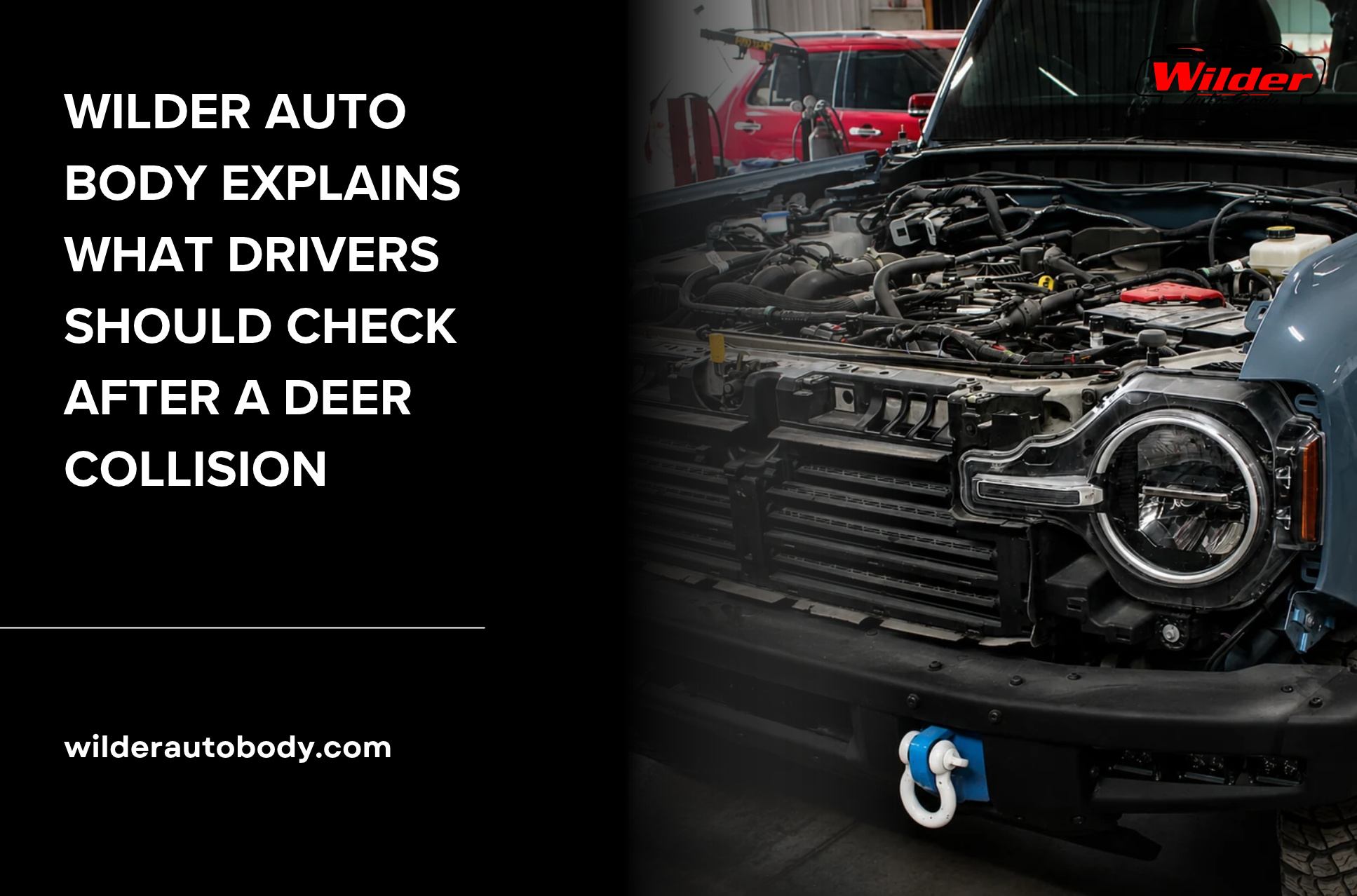

Clay Center, KS – November 18, 2026 – PRESSADVANTAGE –
Wilder Auto Body, a family-owned collision repair facility, is sharing practical guidance for drivers whose vehicles strike a deer. The guidance explains what may be damaged beyond the visible dent, when a vehicle should not be driven, why a diagnostic scan is not a calibration, and which records help keep a deer collision repair claim organized.
Deer strikes are a concern for drivers traveling on rural roads, particularly where wildlife may cross highways with little warning. An animal strike often occurs away from populated areas, leaving drivers to assess the vehicle’s condition before deciding whether to continue driving or arrange assistance.
Damage may center on the front of the vehicle, although a deer can also strike a fender, door, or mirror. A bumper cover may flex during an impact and appear relatively intact while components behind it, including brackets, energy absorbers, headlamp mounts, or radiator supports, are bent or broken.
Damage to cooling components may not be immediately visible. The extent of the damage depends on the vehicle, impact speed, and point of contact, making a complete inspection important before determining the appropriate repair approach.
Some vehicles should not be driven after an animal strike. Fluid leaking beneath the engine, an engine temperature warning, nonfunctioning headlamps, a hood that will not latch, or loose body components are warning signs that require attention.
When these conditions occur, drivers should stop in a safe location and arrange towing rather than risk additional damage or unsafe operation. Wilder Auto Body offers towing assistance for vehicles that cannot be safely driven to the repair facility.
Modern vehicles may also contain Advanced Driver Assistance Systems (ADAS), including automatic emergency braking and adaptive cruise control. These systems can rely on radar sensors and cameras positioned near the front bumper, grille, or windshield.
A front-end collision may damage or shift a sensor or mounting bracket, potentially affecting its intended operation. Even a small change in component positioning can require additional evaluation according to the vehicle manufacturer’s repair procedures.
A diagnostic scan and an ADAS calibration serve different purposes. A scan can identify stored diagnostic trouble codes and other system information, while calibration involves checking or adjusting applicable sensors according to manufacturer specifications.
The absence of dashboard warning lights does not necessarily confirm that an affected sensor remains correctly positioned. Whether calibration is required depends on the vehicle, the damaged components, and the repairs performed.
Wilder Auto Body provides in-house ADAS calibration using the John Bean TruePoint system. This capability supports applicable calibration procedures when required as part of a collision repair.
Insurance documentation is another consideration following a deer collision. Coverage and deductible requirements depend on the individual insurance policy, and the insurer determines whether a claim qualifies under its terms.
Drivers can help maintain accurate records by taking photographs of the vehicle and accident scene when safe, recording the date, time, and location of the incident, and retaining any available report number.
Wilder Auto Body assists customers with understanding repair estimates, deductibles, supplemental repair documentation, and the approval process. These services help vehicle owners follow the repair process without implying that a particular insurance outcome is guaranteed.
The facility follows a documented workflow for collision repair services that includes pre-repair scanning, damage assessment, disassembly when necessary, and repair planning based on applicable original equipment manufacturer procedures.
Additional steps may include structural measurements, quality control inspections, post-repair diagnostic scans, required calibrations, and a final quality review. When structural damage is identified, the shop uses a Kansas Jack Sonic 360 measuring system to evaluate affected areas.
Repair estimates may change when concealed damage becomes visible during disassembly. An initial assessment may identify damage to a bumper cover or headlamp, while further inspection reveals affected mounting components, cooling system parts, or underlying structures.
Supplemental repair documentation helps explain these findings and any changes to the original repair plan. Vehicle owners can retain the initial estimate, approved supplements, calibration records when applicable, and final invoice for future reference.
Drivers comparing repair options after an animal strike should confirm that the facility evaluates collision-related damage beyond visible exterior panels. Important considerations include pre-repair and post-repair scanning, the use of applicable manufacturer procedures, and calibration documentation when affected vehicle systems require it.
A vehicle that appears to have only minor exterior damage may still require inspection of underlying components or electronic systems. Professional evaluation helps establish whether the vehicle can be safely operated and which repairs are necessary.
Wilder Auto Body’s consumer guidance emphasizes that deer collision damage should be assessed according to the complete impact area rather than the appearance of the largest visible dent. Recognizing warning signs, understanding diagnostic and calibration requirements, and maintaining repair documentation can help drivers make informed decisions following an animal strike.
About Wilder Auto Body
Wilder Auto Body Inc. is a family-owned collision repair facility founded by Kyle Wilder in November 2003. The company emphasizes safe, proper repairs, manufacturer repair procedures, modern collision repair technology and customer guidance throughout the repair process. Its services include collision repair, structural repair, auto painting, in-house ADAS calibration and insurance claim assistance. The shop holds OEM certifications from GM, FCA, Kia and Nissan and serves drivers from its 17,500-square-foot Clay Center auto body shop at 138 E Crawford St, Clay Center, KS 67432.
###
For more information about Wilder Auto Body Inc, contact the company here:
Wilder Auto Body Inc
Kyle Wilder
(785) 632-3484
office@wilderautobody.com
138 E Crawford St, Clay Center, KS 67432

