
TUV Certified vs Uncertified: Why TGTY High Quality Nickel Tube Supplier Options Matter
BAOJI, CHINA, August 3, 2026 /EINPresswire.com/ -- In modern industrial engineering, selecting material components for

Press Release Disclaimer: This is a press release distributed through the XPR Media network. It has not been independently verified by our newsroom.
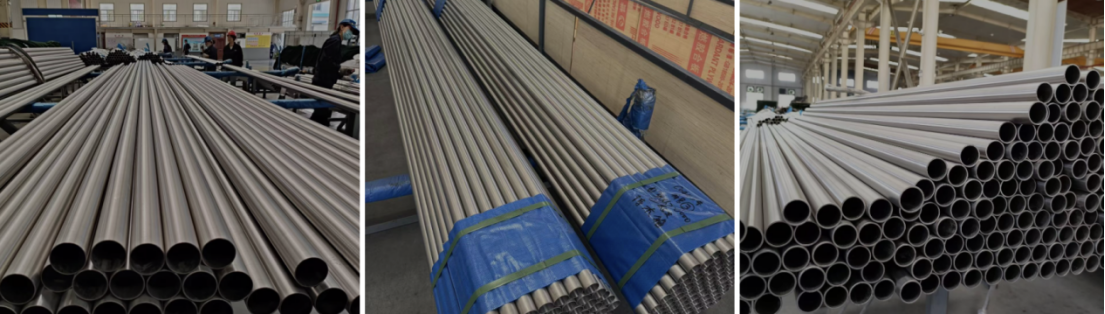

BAOJI, CHINA, August 3, 2026 /EINPresswire.com/ — In modern industrial engineering, selecting material components for high-stress environments is one of the most critical decisions affecting operational longevity and safety. Among these materials, seamless and welded nickel alloy tubing serves as a backbone for infrastructure operating under severe corrosion, high pressures, and extreme temperature fluctuations. However, the market presents a stark divide between certified material offerings and unverified alternatives. Partnering with a reliable High Quality Nickel Tube Supplier ensures access to engineered nickel tubes designed to withstand aggressive media, such as sulfuric acid, alkalis, and marine environments. Nickel tubing, known for its exceptional heat resistance, mechanical strength, and phase stability, plays an essential role across chemical processing, power generation, and aerospace sectors. As industrial systems push toward higher efficiency and harsher operating parameters, the distinction between TÜV-certified products and non-certified alternatives becomes a defining factor in project risk management.
Critical Role of TÜV Certification
The global demand for high-performance alloy tubing continues to expand rapidly, driven by key growth vectors including offshore energy exploration, liquefied natural gas infrastructure, green hydrogen production, and advanced chemical synthesis. In these capital-intensive industries, equipment failure leads not only to substantial financial losses from unscheduled downtime, but also to severe safety and environmental liabilities. Consequently, engineering procurement teams are placing unprecedented emphasis on material compliance, structural reliability, and standardized quality assurance.
Within this evolving market landscape, TÜV certification represents a globally recognized benchmark for technical quality, safety, and regulatory compliance. Originating from Germany’s Technischer Überwachungsverein, TÜV organizations perform rigorous independent audits, material testing, and manufacturing quality evaluations. A TÜV certificate verifies that a production facility operates under validated quality management systems, adhering strictly to international standards such as Pressure Equipment Directive standards and ASTM specifications. The certification covers chemical composition analysis, mechanical property verification, microstructural examination, and non-destructive testing procedures. In critical process industries, utilizing TÜV-certified nickel alloy components provides objective verification that the material will perform predictably under designated design pressures and thermal cycles.
Certified Compliance vs Uncertified Risk: Evaluating Performance and Integrity
Understanding the operational differences between certified and uncertified nickel tubing requires analyzing material properties, manufacturing controls, and long-term performance metrics under actual working conditions.
Material Purity vs Compositional Flaws
Certified nickel tubing undergoes comprehensive heat-by-heat chemical analysis to guarantee exact elemental proportions. Elements such as nickel, chromium, molybdenum, and iron are balanced within tight tolerances, preventing trace element contamination that can degrade corrosion resistance. Conversely, uncertified tubing often suffers from chemical inconsistencies, improper grain structures, or residual impurities. These hidden defects significantly accelerate localized pitting, crevice corrosion, and intergranular attack when exposed to aggressive industrial fluids.
Structural Integrity vs Unverified Pressure Limits
High-pressure heat exchangers, condensers, and chemical reactors require tubes capable of maintaining dimensional stability under severe mechanical loads. Certified tubes undergo compulsory hydrostatic testing, ultrasonic examination, and eddy current testing to detect internal voids, micro-cracks, or wall thickness variations. Uncertified options, lacking validated non-destructive testing protocols, carry inherent risks of pinhole leaks, wall collapse, or sudden structural rupture under cyclic pressure loads.
Complete Traceability vs Operational Uncertainty
A primary requirement of TÜV certification is full mill test report traceability from raw material melting through final cold drawing and heat treatment. Every batch is traceable to its original heat number, providing complete transparent documentation for compliance audits. Uncertified materials often lack reliable documentation, creating significant compliance hurdles for operators undergoing third-party safety inspections or seeking operational insurance coverage.
Advanced Manufacturing Standards and TGTY Technical Edge
To meet the rigorous expectations of global industrial projects, manufacturing excellence must be supported by state-of-the-art facilities and continuous process innovation. Leading manufacturers such as TGTY have integrated advanced metallurgical processing with rigorous quality control protocols to supply high-integrity nickel tubing globally.
The manufacturing process for high-performance nickel alloy tubing involves cold drawing and cold rolling techniques to achieve precise dimensional tolerances, superior surface finishes, and controlled mechanical properties. Subsequent bright annealing in controlled hydrogen atmospheres restores ductility and enhances grain boundary resistance without compromising surface quality. These precision steps ensure that the final tubing exhibits consistent grain size, minimal wall thickness deviation, and superior inner surface smoothness, which reduces fluid flow resistance and minimizes fouling in heat exchangers.
TGTY’s specialized product range includes commercially pure nickel grades along with high-nickel alloys engineered for specific harsh environments. These products serve diverse applications, including offshore oil and gas extraction systems, seawater desalination plants, nuclear reactor cooling loops, and high-temperature petrochemical processing units. By maintaining strict alignment with international standard specifications, the enterprise delivers tubing solutions capable of operating across extended thermal ranges and aggressive chemical media.
In real-world project applications, specialized nickel tubing has proven crucial for solving complex material engineering challenges. For instance, in heavy chemical processing projects involving hot concentrated acids, custom-fabricated nickel alloy pipe systems have replaced traditional materials that suffered from rapid degradation. The implementation of high-purity, fully tested nickel tubes extended equipment service life, reduced maintenance intervals, and delivered substantial reductions in total cost of ownership. Such real-world outcomes illustrate why verified material quality remains an indispensable asset for engineering teams worldwide.
To explore technical specifications, material grades, and industrial applications, visit the official website: https://www.tgtiindustrial.com/
Bao Ji Special Steel Titanium Industry Co.,Ltd.
Bao Ji Special Steel Titanium Industry Co.,Ltd.
email us here
Legal Disclaimer:
EIN Presswire provides this news content “as is” without warranty of any kind. We do not accept any responsibility or liability
for the accuracy, content, images, videos, licenses, completeness, legality, or reliability of the information contained in this
article. If you have any complaints or copyright issues related to this article, kindly contact the author above.

Media gallery


